
Healthy aging after 60 is rarely about doing something extreme. It is usually built on a few steady habits that support energy, mobility, and recovery day after day.
Many people find that mornings matter more than they expect. The first part of the day often sets the rhythm for hydration, movement, appetite, and sleep later that night.
The habits below focus on calm, consistency, and safety. They are designed to support long-term health — not to create strict rules or a rigid routine.
Here are six simple morning habits that support healthy aging without turning your life into a program.
1) Use Calm Breathing to Reduce Morning Stress
Many people wake up already feeling rushed, tense, or mentally busy — even before they check a phone or start the day. Slow breathing helps settle the nervous system and creates a calmer baseline for the hours ahead.
This is one of the easiest habits to begin because you can do it while still lying in bed. No equipment. No planning. Just a short pause before the day begins.
One well-known approach is the 4-7-8 breathing method (inhale for 4 counts, hold for 7, exhale for 8). The longer exhale is often what makes the biggest difference — it signals the body that it is safe to relax.
A simple way to try it:
Keep your eyes closed, place one hand on your chest or abdomen, and complete 3–5 slow rounds. If the hold feels uncomfortable, shorten it. The goal is calm breathing, not perfect timing.
Many people notice this reduces morning tension and makes it easier to get up without feeling immediately “switched on.”
Cleveland Clinic: How To Do the 4-7-8 Breathing Exercise
2) Start With Water Before Anything Else
After a full night of sleep, hydration is often lower than it feels. Starting the day with water supports circulation, digestion, and mental clarity.
A simple approach is to drink a glass of water soon after waking — before coffee and before breakfast.
Mayo Clinic: Water — How Much Should You Drink Every Day?
3) Get Morning Light to Set Your Body Clock
Morning daylight is one of the strongest signals for your circadian rhythm. It helps the brain understand that the day has started, often improving alertness in the morning and sleep quality later that night.
Even a few minutes outdoors or near bright daylight can make a noticeable difference over time.
Sleep Foundation: Circadian Rhythm
4) Eat Protein Early to Support Strength
Protein becomes more important with age because the body works harder to maintain muscle, strength, and stability.
Many people find it helpful to include a protein-forward breakfast rather than starting the day with only toast, cereal, or something sweet.
Examples include eggs, Greek yogurt, cottage cheese, or another protein-focused meal that digests comfortably.
5) Practice Brief Balance Work
Balance is one of the most underrated parts of healthy aging. It is not about athletic performance. It is about staying steady and confident while walking, turning, stepping over objects, and moving through daily life.
A simple morning routine helps keep balance “online” without requiring a workout or special equipment.
A simple 60-second balance routine:
- Stand near a counter, sturdy chair, or wall (close enough to touch for safety)
- Place both feet on the floor and take one steady breath
- Lift one foot slightly off the ground (even 1 inch is enough)
- Hold for 10–20 seconds
- Switch legs and repeat
- Do 2 rounds total (about one minute overall)
To gently progress over time:
- Reduce hand support (hover your fingers instead of gripping)
- Turn your head slowly left and right while staying steady
- Briefly close your eyes for 1–2 seconds if safe and comfortable
Keep it calm: balance work is not something to push through. The goal is steady practice, not strain. If you feel unsafe, stay supported or skip it that day.
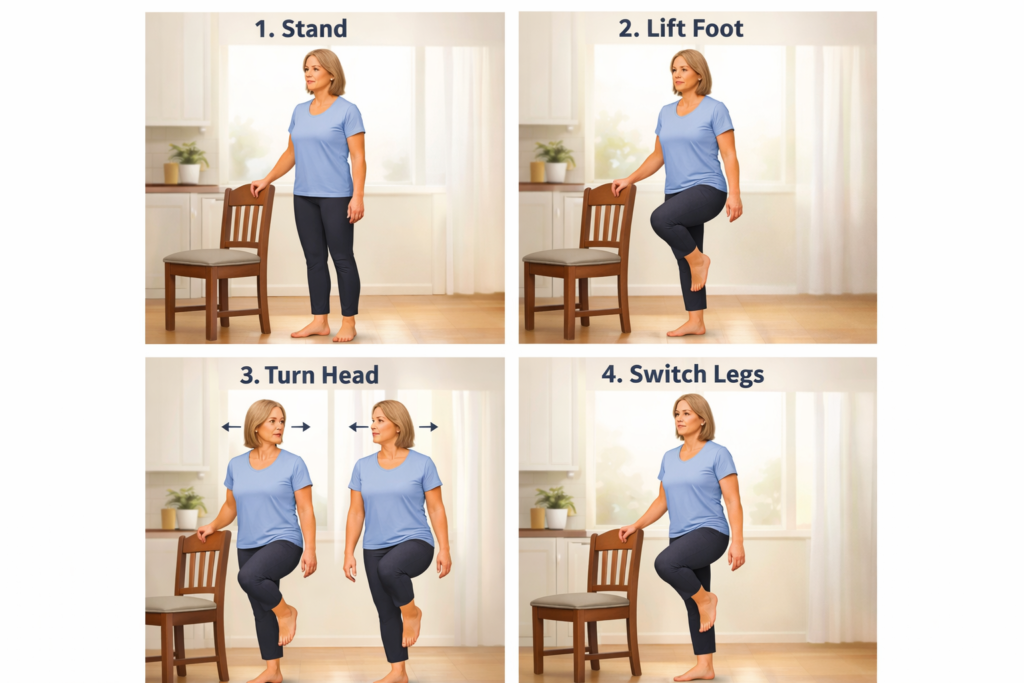
CDC: STEADI (Falls Prevention)
6) Add a Small Amount of Movement
You do not need an intense workout to support healthy aging. The body simply responds well to some movement after a night of stillness.
Gentle activity helps circulation, reduces stiffness, supports digestion, and wakes up joints and muscles in a natural way.
Simple morning movement ideas:
- A short walk outside or around the house
- Gentle stretching for hips, ankles, shoulders, or back
- Slow stair-walking (if safe and comfortable)
- Light house movement such as making the bed or tidying the kitchen
The goal is not to “work out.” It is simply to remind the body that the day has started — and that you are meant to move through it.
A Note on More Structured Morning Routines
Some people become interested in more structured routines focused on metabolism, hormones, or energy regulation. These approaches often include specific timing around light exposure, caffeine, phone use, and movement.
Those routines are not necessary for healthy aging. Many people do very well with the simpler habits outlined above.
If you enjoy experimenting and want a deeper look at how morning timing may influence energy and appetite, see How Morning Rhythms Shape the Rest of the Day After 60.
The Bottom Line
Healthy aging after 60 is not built through one perfect habit. It grows from a few small patterns that support hydration, rhythm, movement, strength, and calm.
Rather than trying to do all six at once, choose one habit and repeat it consistently. Over time, steady mornings often lead to steadier days.
Hello there I am so delighted I found your weblog, I really found you by error, while I
was looking on Bing for something else, Anyhow I am here now and would just like to say kudos for a marvelous post and a all round interesting blog (I also love the
theme/design), I don’t have time to browse it all at the minute
but I have saved it and also added your RSS
feeds, so when I have time I will be back to read more, Please do keep up
the fantastic job.